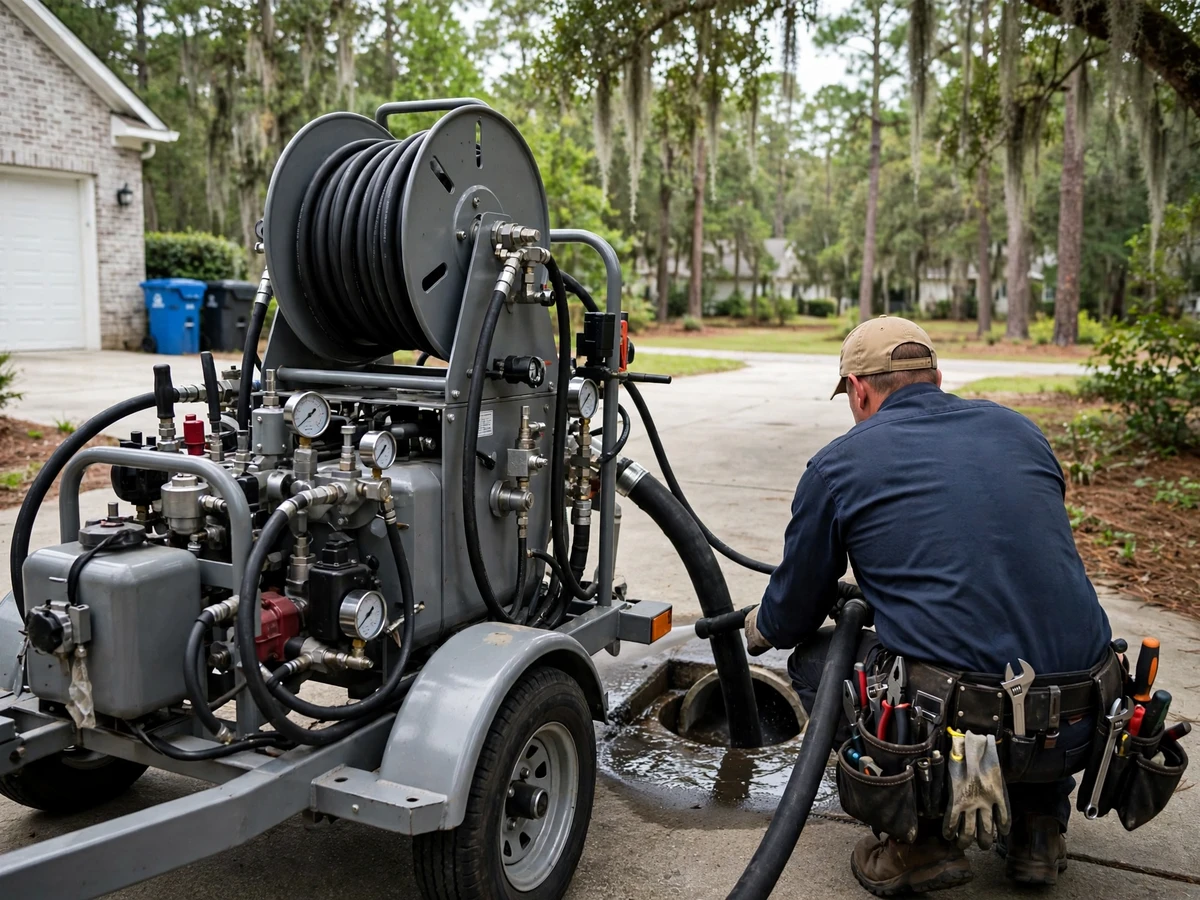
The honest short answer: snaking punches a hole through a clog, hydro jetting scours the whole pipe clean. Both have a real place, and the wrong choice either wastes money or leaves the underlying problem to come back in a few weeks, which ends up costing more in the long run than getting it right the first time.
A cable, or snake, works by physically breaking through whatever is blocking the line, hair, grease, a foreign object. Creating a channel for water to flow again. It is fast, less expensive, and genuinely sufficient for the majority of single-fixture clogs.
Hydro jetting uses high-pressure water to clean the entire interior diameter of the pipe, not just punch through the blockage. That matters most for two situations: root intrusion, where cabling can shred through roots temporarily but leave enough behind to regrow within weeks. Long-term grease buildup coating the pipe walls, which cabling does not remove.
The tell that a line needs jetting rather than another round of cabling is repetition. If the same drain clogs again a few weeks after cabling, especially in the same spot, that is usually a sign the underlying buildup or root mass was not actually cleared, just pushed through.
Cost reflects the difference in what each method actually does: standard cabling typically runs $150 to $350, while hydro jetting runs $350 to $650. Jetting costs more per visit but can mean fewer repeat visits for a chronic problem.
Hydro jetting isn't automatically the right tool for every pipe, either. Older, already-compromised clay or cast iron pipe can, in rare cases, be damaged by the pressure jetting uses if the line is structurally weak rather than just clogged. That is another reason a camera inspection before jetting is worth doing on an older line rather than simply assuming jetting is always the stronger, safer option overall.
Commercial kitchens and any line with heavy, recurring grease buildup are cases where scheduled jetting on a regular interval, rather than reactive cabling after a clog forms, is genuinely the more cost-effective long-term approach. It prevents the buildup from reaching clog-forming thickness in the first place.
A homeowner's own guess about which method they need is a reasonable starting point for the phone call, but it shouldn't be the final word. We've had calls requesting jetting for what turned out to be a simple, single-fixture hair clog. Calls requesting a basic snake for what turned out to be significant root intrusion needing the more thorough method.
That's exactly why a technician assesses the line in person before committing to one approach. Being open to either outcome, rather than insisting on a specific method before anyone has looked at the pipe, generally leads to a better result and a fairer price for everyone involved.
Preventing the need for either method as often is mostly about what goes down the drain in the first place. Grease poured down a kitchen sink, even in small amounts over years. Wipes flushed despite "flushable" labeling are the two most common preventable causes of the clogs that eventually require professional cabling or jetting to clear. Both habits are genuinely easy to change once a household knows they're the culprit rather than an unavoidable cost of living in an older home.
For a home with a history of chronic clogs in one specific fixture, such as a kitchen sink that backs up every few months, it's worth asking about a dedicated camera look at that drain run. Treating every visit as an isolated event misses the pattern. A recurring pattern at one fixture often has a fixable, specific cause, a low spot in the pipe, an unusually long horizontal run, that repeated cabling alone won't resolve.
What To Do Before You Call About A Backed-Up Drain
- Stop running water into the affected drain, including the dishwasher and washing machine.
- Skip chemical drain cleaners. They can splash on skin and eyes and may make the line harder for a technician to clear.
- Keep children and pets away from standing water.
- Note which fixtures are slow or backing up. That helps us tell a single clog from a main line problem.
- Call us if more than one drain is affected or water is coming up in a floor drain.
Jetting And Cabling Around Woodstock
Which method fits depends partly on the age and material of the line. Older homes near downtown and in Hickory Flat may have clay or cast iron pipe that deserves a camera look first. Meanwhile, newer PVC lines around Towne Lake are a different situation.
If a jetting visit turns up a cracked or collapsed line, ask the City of Woodstock Building & Safety Division whether the repair needs a permit before work starts. We also check with the permitting office that covers your address.
Common Questions
Can hydro jetting damage my pipes?
On sound PVC or reasonably healthy older pipe, no. On a line with existing structural cracks or severe corrosion, jetting's pressure can occasionally worsen an existing weak point, which is why we camera-inspect an older line first if there's any doubt.
How often should I have my drains professionally cleaned?
Most homes don't need scheduled cleaning at all if drains are working normally. A home with a history of grease buildup, root intrusion, or an older cast iron system may benefit from a proactive jetting every year or two rather than waiting for the next clog.
Is hydro jetting messier or more disruptive than snaking?
Not typically. Both methods work through the same existing drain access points. Jetting doesn't require any additional excavation or opening of walls beyond what a standard cabling job would need.
Is hydro jetting safe for older Woodstock sewer lines?
It depends on the pipe's condition. We recommend a camera inspection first on older clay or cast iron lines so we can see cracks or breaks before applying pressure.
What This Means For You
We bring both cabling and jetting equipment to every drain call specifically so the choice is based on what a technician actually finds in your line, not a guess made over the phone. A single, first-time clog usually gets cabled. A recurring one usually gets a camera look before deciding between the two. Either way, the goal is matching the fix to the actual cause rather than defaulting to whichever method happens to be quoted first.
Most single-fixture clogs are resolved during a standard drain cleaning visit. A backup that keeps returning in the same spot is worth investigating as a possible sewer line issue rather than repeating the same drain service. That kind of on-site judgment call is exactly why we assess in person before quoting a fix.
The choice between the two methods comes up constantly in the older sections of Hickory Flat, where original cast iron and older clay lines are more prone to both grease buildup and root intrusion than newer PVC. Reach out and we can confirm your exact service area on the call.