Emergency Leak Detection: What To Do Right Now
If water is coming through a ceiling, pooling in a yard, or the meter is spinning with everything off, treat it as an emergency. Shut off the main water valve if you can reach it, and move anything that can be damaged away from the wet area. Then call our 24/7 emergency line so we can send someone to locate the leak.
Emergency leak detection means we come out at any hour, find where the water is escaping, and tell you what happens next. We do not wait for a business day when water is actively damaging a home.
Water Bill Went Up And You Can't Find Where It's Coming From?
That is the most common way this call starts: a water bill that jumped for no visible reason, or a meter that keeps spinning even with every fixture in the house turned off. Neither one tells you where the water is going, which is exactly what electronic leak detection is built to answer without cutting into a slab or a wall first.
A slab leak often shows up as a warm spot on the floor, the sound of running water when everything is off, or a section of flooring that stays damp for no obvious reason. None of those symptoms tell you where the leak actually is. That is why guessing and cutting open drywall or concrete on a hunch is the expensive way to find it.
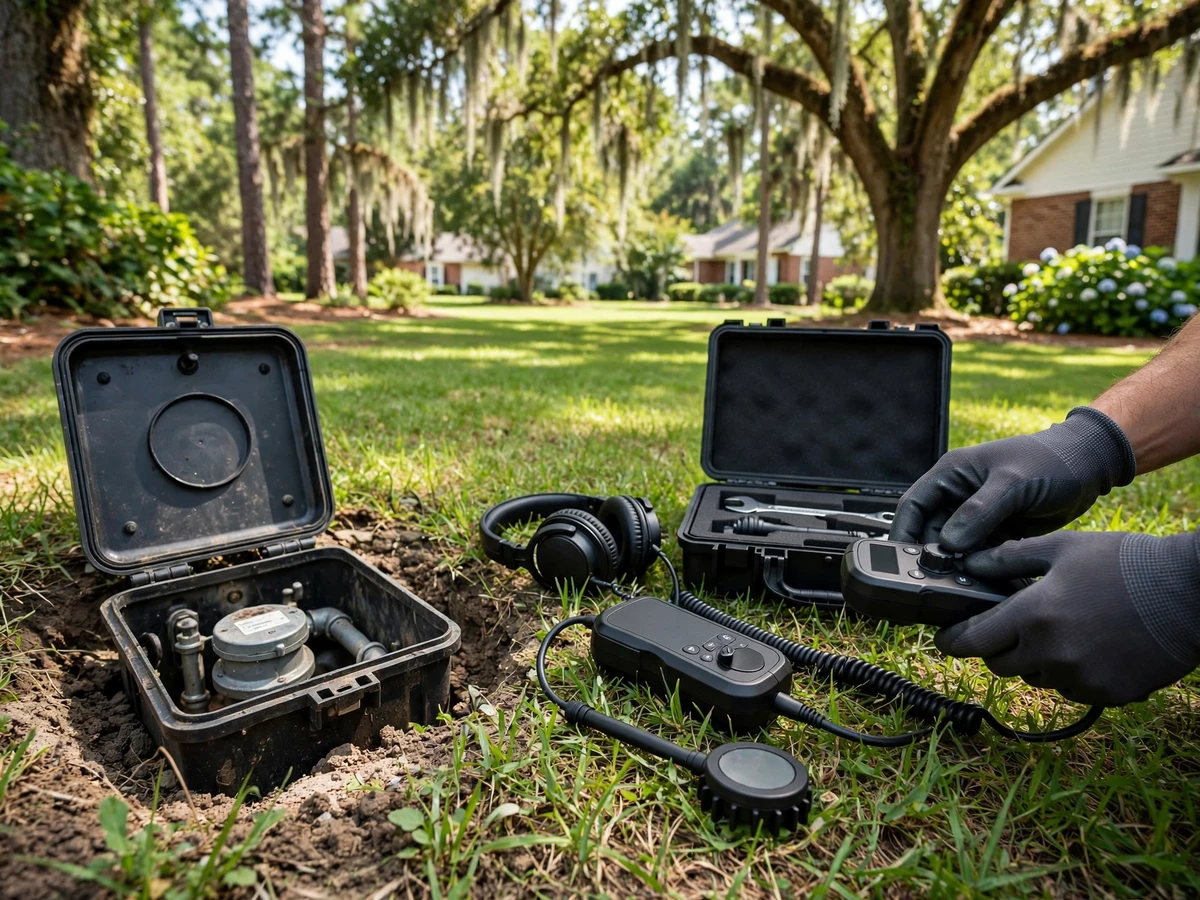
We use acoustic listening equipment and pressure testing to isolate a leak's location before any cutting happens. Acoustic detection listens for the specific sound water makes escaping a pressurized line. Pressure testing isolates which section of the plumbing system is losing pressure. The two methods together usually narrow a slab leak down to a small, specific area rather than an entire room.
A leak between the water meter and the house is a different situation from a leak inside the home's own plumbing. The two are billed differently depending on where the responsibility line falls under Cherokee County's water utility rules. Part of the diagnostic visit is telling you honestly which side of that line the leak is on before any repair work starts.
Not every leak needs to be found this way. A visible drip under a sink or a running toilet does not need electronic detection, since the source is already obvious. Leak detection is specifically for the leaks you cannot see: slab leaks, leaks inside a wall. Underground leaks between the meter and the house.
Pressure testing works by isolating sections of the plumbing system with valves and monitoring how quickly each section loses pressure when sealed off. A section that holds pressure normally is ruled out. A section that drops faster than expected points to where the leak lives, which narrows the search before any acoustic equipment or cutting gets involved.
An underground leak between the water meter and the house is a different scenario from a slab leak inside the home's footprint. It can show up as a soft or unusually green patch of yard, or water pooling near the meter box itself, rather than anything visible indoors. The same acoustic and pressure-based methods apply, just outside rather than under the slab.
Once a slab leak is confirmed, the repair itself is usually a spot fix rather than a full-home repipe. That said, a home with several unrelated leaks in a short window is sometimes a sign the whole system needs a broader look, which is a conversation worth having with a technician on site rather than guessing over the phone.
A leak that turns out to be at a fixture connection rather than inside a wall is often resolved as part of a routine drain or fixture visit instead of a full detection appointment, which is one reason we diagnose before quoting a price.
Slab leak calls cluster heavily in the older, downtown-adjacent parts of the city as well as newer builds near Sixes that sit on the same clay soil base.
The older streets around downtown Woodstock more often mean aging supply lines. Meanwhile, the newer subdivisions off Towne Lake Parkway and around Bradshaw Farm are more likely to be slab-on-grade, which brings the clay soil question into play. Homes that back onto Corps of Engineers land near Lake Allatoona, as many Eagle Watch lots do, can also have irrigation lines that complicate a leak search.
What It Typically Costs
| Service | Typical Range |
|---|---|
| Standard Leak Detection Visit | $300 to $600 |
| Slab Leak Detection (Access-Dependent) | $450 to $900 |
| Slab Leak Repair (After Detection) | $900 to $2,800 |
We give a written quote before non-emergency work begins. Emergency dispatch carries a standard trip charge disclosed on the call. Want a real number for your situation? Call (770) 214-4545.
Water Service Line Leaks Between The Meter And The House
One of the most common reasons people call about leak detection is a line that runs from the water meter to the house. The signs are a meter that keeps turning with every fixture off, a patch of yard that stays soggy, or a spot of unusually green grass over the line. Many homeowners also tell us a plumber has already looked inside the house and found nothing.
We trace the line with electronic equipment and mark where the water is escaping before anyone digs. That matters on a long run, because a line that is hundreds of feet from the street to the house is expensive to open up on a guess. Once the leak is pinpointed, we explain whether a spot repair or a full line replacement makes more sense.
If you are not sure where your responsibility starts and the utility's ends, ask your water provider before the visit. The meter box is the usual dividing point, but the details are worth confirming for your address.
Leaks In Ceilings, Walls, And Crawlspaces
A stained ceiling, a soft spot in drywall, or water showing up in a basement or crawlspace usually means the leak started somewhere else. A bathroom above a dining room, a supply line inside a wall, and a drain under a tub are all common sources. The wet spot only tells you where the water ended up.
We work from the damage back toward the source with moisture readings, listening equipment, and pressure testing. The goal is to open as little drywall as possible and fix the actual pipe rather than patch the stain. If the area has been wet for a while, we will tell you honestly when drying or water damage work should follow.
Crawlspace and under-house leaks are a separate case, since the water often drips for weeks before anything shows inside the home. A musty smell, a floor that feels slightly spongy, or a water bill that creeps up month after month are the clues we hear most.
Commercial And Multi-Unit Leak Surveys
Leaks on commercial property and in multi-unit buildings are harder to find. That is because there are more lines, more fixtures, and often more than one owner or tenant involved. Shopping plazas, small office buildings, duplexes and small apartment properties call us when a utility notice says there is a leak or water is showing up in a parking lot or a shared wall.
We start by shutting down sections of the system and watching the meter to narrow the search. From there we use electronic tracing to locate the leak and report where it is, so the property owner can decide on the repair. Because tenants are affected, we try to schedule detection work around business hours when that is possible.
Irrigation, Yard, And Pool Line Leaks
An irrigation valve that runs fast, a wet patch where the sprinklers are the only thing nearby, or a pool or hot tub supply line that loses water are leaks that hide outdoors. They are easy to mistake for a house leak because the meter runs the same way.
We separate the irrigation or pool supply from the house plumbing first, which tells us in minutes which side the leak is on. If the leak is in a yard line, we locate it and mark the spot so the repair is a small dig instead of a trench through the lawn.
Frequently Asked Questions
How can you find a leak without cutting into my floor?
Acoustic listening equipment picks up the specific sound of water escaping a pressurized line through a slab or wall. Pressure testing narrows down which section of plumbing is losing pressure. Together they isolate a leak's location to a small area before any cutting happens, rather than opening up an entire room to search.
My water bill went up but I don't see any water anywhere. Could it still be a leak?
Yes. A slab leak can run for weeks without any visible sign inside the house. The water is escaping under the concrete rather than into a living space. A water bill that rises with no change in usage and a meter that keeps moving with everything off are the two most reliable early signs.
Is a slab leak covered by homeowners insurance?
Most policies cover the sudden, accidental damage a slab leak causes but not the plumbing repair itself. Coverage for a leak that went undetected for a long time can be denied as gradual damage. Check with your specific carrier before assuming either way.