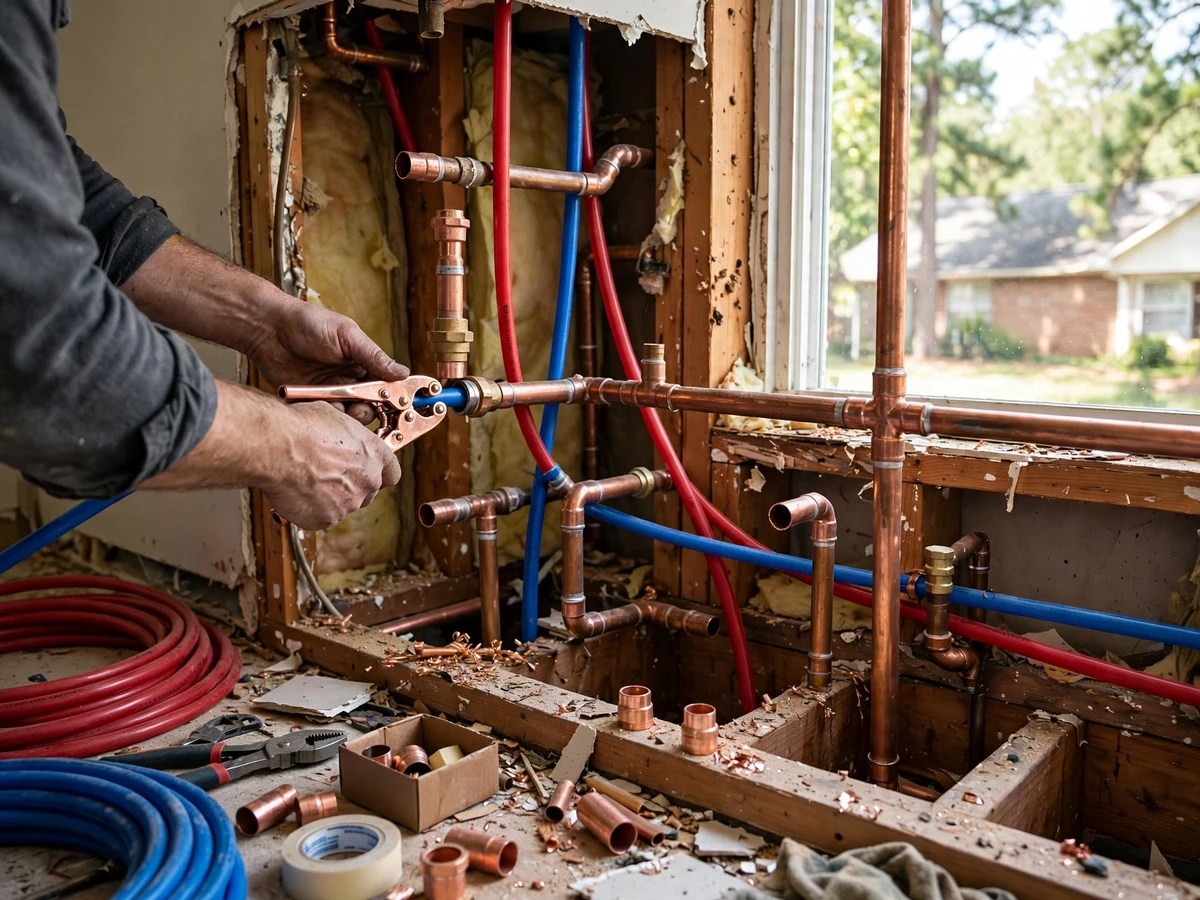
Tired Of Repairing The Same Old Pipes Over And Over?
If you've had more than one or two isolated pipe leaks in the same older home over a short span, or persistently low water pressure throughout the house rather than at just one fixture, the pattern often points to a system-wide problem. The cause is the pipe material itself, not a string of unrelated bad luck. The branded fix for that is a repipe.
Galvanized steel pipe, common in Woodstock homes built before the 2000s building boom, corrodes from the inside out, gradually narrowing the pipe's effective diameter. That shows up as declining water pressure over years and an increasing frequency of pinhole leaks as the corrosion progresses toward failure.
A single isolated leak in an otherwise sound system is a repair, not a reason to repipe. The signal for a full repipe is a pattern: multiple leaks in different spots over a relatively short time, persistent low pressure throughout the house, or visibly rust-colored water even after running a tap for a minute.
PEX and copper are the two standard modern materials. PEX costs less and is more forgiving of a freeze (it can expand slightly without bursting in some cases). Meanwhile, copper has a longer track record and is preferred in some situations, exposed runs, for example. We'll recommend based on your home's specific layout, not a default answer.
A whole-home repipe is disruptive but usually completed faster than most homeowners expect, often within a few days for a typical single-family home, with wall access points patched afterward (drywall/paint touch-up is typically a separate line item from the plumbing work itself).
Partial repiping, replacing only the sections showing the worst corrosion rather than the entire system, is sometimes a reasonable middle step. That said, it comes with the honest caveat that the remaining original pipe will likely need attention eventually too.
A repipe performed under permit meets current International Plumbing Code (IPC) requirements with Georgia's amendments regardless of what code applied when the original galvanized system was installed decades ago, which matters for both safety and for a future sale of the home.
During a repipe, water service is typically interrupted for at least part of a day while the old lines are removed and new ones installed. We coordinate timing so a household can plan around at least one bathroom or a temporary water source rather than being caught without any water access at all.
A repipe decision usually follows a pattern first identified during leak detection or repeated general repair visits on the same aging system. Once a repipe is complete, a water heater replacement is often a reasonable next step if the unit is also original to the home.
This conversation comes up most in the older, pre-2000s sections of downtown Woodstock, where galvanized supply lines are most common.
Downtown Woodstock's older housing stock is where this conversation comes up most often. That said, any home with a confirmed pattern of galvanized-pipe failures anywhere in our service area is a candidate.
Repipe conversations are most common in two places: the oldest homes within a few blocks of Main Street, where galvanized supply lines are still found. The 1990s homes of Towne Lake Hills and Eagle Watch, where early PEX and original copper fittings are aging. A repipe in an older downtown home and one in a Wyngate two-story are different jobs, so we scope each from the actual layout.
What To Check Before We Arrive
Know where your temporary water access will be
Confirm with your technician which fixture, if any, stays functional during the repipe, so you can plan the day around it rather than being caught without any water access.
Keep pets and children away from open wall sections
A repipe temporarily opens wall or ceiling sections to access old lines. Keep those areas off-limits until the work is complete and patched.
What It Typically Costs
| Service | Typical Range |
|---|---|
| Whole-Home Repipe (PEX, Average Home) | $4,000 to $10,000 |
| Whole-Home Repipe (Copper, Average Home) | $6,000 to $14,000 |
| Partial Repipe (Worst Sections Only) | $1,500 to $4,000 |
We give a written quote before non-emergency work begins. Emergency dispatch carries a standard trip charge disclosed on the call. Want a real number for your situation? Call (770) 214-4545.
Attics, Crawlspaces, And How We Route New Pipe
Whole-house repiping does not always mean cutting open every wall. In many homes the new lines can be run through an attic or a crawlspace, which keeps drywall repair to a minimum. We walk the home before quoting so we can point out where access is easy and where it is not.
If you are weighing a repipe against repeated leak repairs, ask for both numbers. A written quote for the whole job beside the cost of the spot repairs you have had lets you compare them on actual figures.
Frequently Asked Questions
How do I know if I need a repipe versus a single repair?
A single isolated leak is usually a repair. A pattern of multiple leaks in different spots, persistent low pressure throughout the house, or rust-colored water are the real signals a full repipe is worth considering.
PEX or copper: which is better?
Both are reasonable modern materials. PEX costs less and handles some freeze events better. Copper has a longer track record and suits certain exposed-run situations. We recommend based on your home's specific layout, not a default answer.
How long does a whole-home repipe take?
Often just a few days for a typical single-family home, with drywall and paint touch-up at access points usually handled as a separate step afterward.