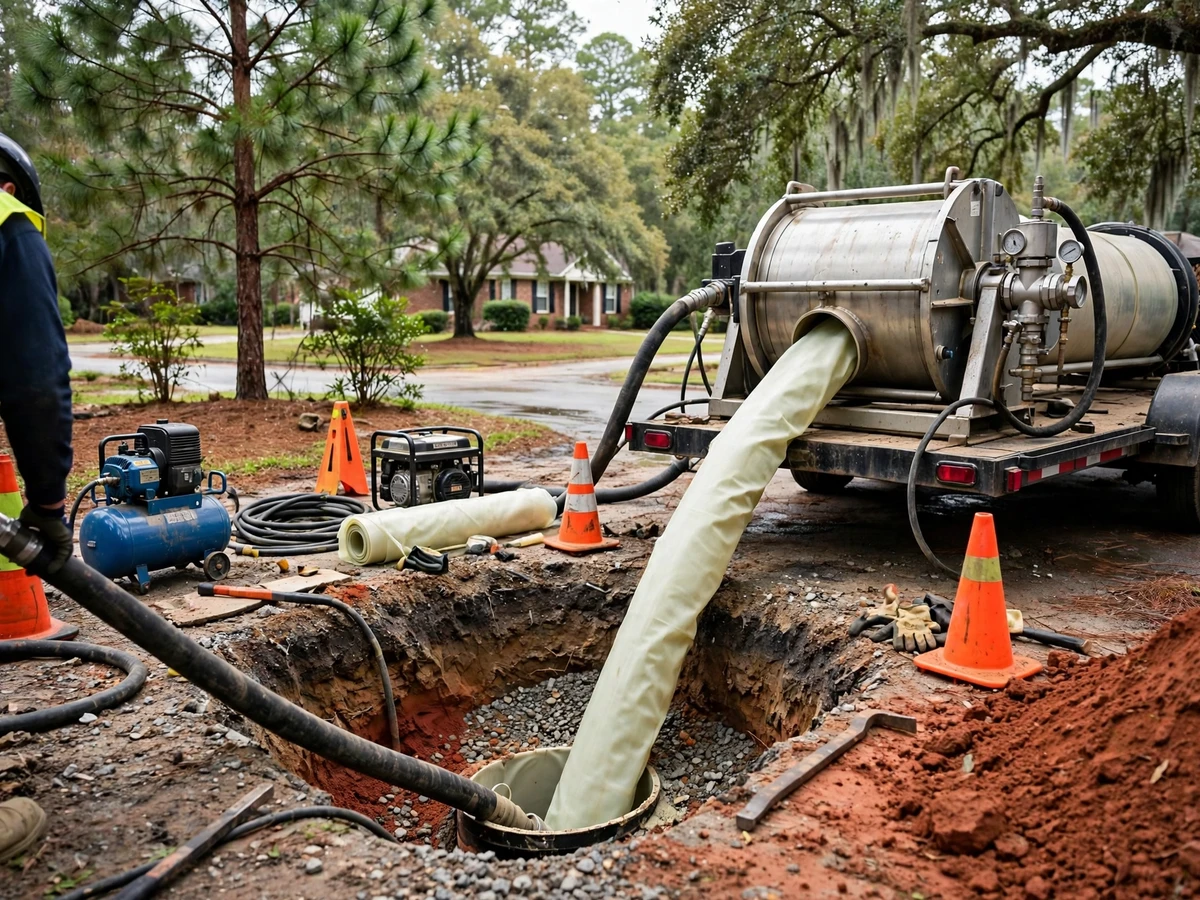
Told You Need A New Sewer Line But Don't Want Your Yard Dug Up?
That's the exact situation trenchless pipe lining solves. If a camera inspection has shown root intrusion, a crack, or a structurally damaged section of sewer line, lining is often a way to fix it through a small access point rather than excavating the pipe's full length.
The process starts with the same camera inspection that would precede any sewer repair: confirming exactly where the damage is and how extensive it is. That determines whether lining is actually the right fix, or whether the damage is severe enough (a fully collapsed section, for example) to need a different method.
Once a liner is confirmed as the right approach, it's fed through the existing pipe via an access point, typically a cleanout or an excavated entry point smaller than what full pipe replacement would require. The liner is then inflated against the pipe walls and cured, creating a new, jointless pipe inside the old one.
This is most effective for cracks, root intrusion damage, and general deterioration in an otherwise structurally intact pipe path. It's not the right fix for a pipe that's collapsed or crushed, which still needs traditional excavation and replacement.
Lining a pipe genuinely does reduce its interior diameter slightly, which is a real trade-off worth understanding. That said, the reduction is small enough that it rarely affects flow capacity in a typical residential application.
Trenchless lining, when the repair calls for it, has to meet the same NSF/ANSI-certified material and installation standards as any other sewer repair method under Georgia's adopted plumbing code. That's worth confirming with any contractor proposing this fix, since not every liner product or installer meets that bar.
Cost for lining is generally comparable to or somewhat higher than a localized spot repair for a short damaged section. But often meaningfully less than full excavation and replacement for a longer damaged run, especially where the sewer line passes under a driveway, mature landscaping, or other features that would be expensive to disturb and restore.
The curing process for a liner typically takes several hours, during which the line cannot be used, which is a real scheduling consideration for a household with only one bathroom or a business that cannot have its restroom out of service for an extended stretch.
A homeowner considering this option should ask specifically whether the proposed liner material and installer both carry the certifications noted above. The durability of a lining job depends heavily on both factors together.
We provide before-and-after camera footage as part of a lining job's documentation, giving you a clear record of the pipe's condition before the repair and confirmation of the finished result afterward.
Trenchless lining is one possible outcome of a sewer line repair camera inspection, alongside localized spot repair or, for a collapsed section, traditional excavation. Root intrusion severe enough to need lining is often first suspected after a recurring issue resolved temporarily by hydro jetting.
This comes up most for older sewer lines under mature landscaping in downtown Woodstock, Towne Lake, and Sixes, where full excavation would be especially disruptive.
Established, tree-lined neighborhoods like Towne Lake and Sixes are where this option comes up most, given the mature landscaping most homeowners would rather not excavate.
Trenchless lining matters most where digging is costly: under the driveways and mature landscaping of Towne Lake Hills and Wyngate, between the storefronts along Main Street downtown. Beneath the paved areas near the Towne Lake Parkway retail corridor. A camera inspection tells us whether the pipe is a lining candidate before we recommend anything.
What It Typically Costs
| Service | Typical Range |
|---|---|
| Camera Inspection (Prerequisite) | $200 to $400 |
| Trenchless Lining (Partial Run) | $3,000 to $6,000 |
| Trenchless Lining (Full Line) | $4,000 to $9,000 |
We give a written quote before non-emergency work begins. Emergency dispatch carries a standard trip charge disclosed on the call. Want a real number for your situation? Call (770) 214-4545.
Frequently Asked Questions
Is trenchless lining always cheaper than digging up the pipe?
Not always for a very short damaged section. But it's often less expensive and less disruptive overall for a longer damaged run, especially one passing under a driveway or established landscaping that would be costly to restore.
Does lining reduce the pipe's flow capacity?
Slightly, since the liner takes up a small amount of interior space, but the reduction rarely affects flow in a typical residential application.
Can any damaged sewer line be fixed with lining?
No. A fully collapsed or crushed section needs traditional excavation and replacement. Lining works for cracks, root intrusion damage, and general deterioration in a structurally intact pipe path, which a camera inspection confirms before recommending it.