Water Tastes Off, Or Leaves Spots On Everything?
Cloudy spots on dishes, a chlorine taste or smell, or skin and hair that feel different after a shower are usually about water quality, not a plumbing malfunction. The branded fix, when it's genuinely warranted, is called water filtration or water softening depending on what's actually causing it.
Much of North Georgia's water supply, drawn from surface sources and groundwater passing through limestone and dolomite geology, carries a moderate level of dissolved calcium and magnesium, generally classified as moderately hard water. That's a real, industry-recognized classification (the Water Quality Association's standard puts the threshold around 7 grains per gallon), not a sales term.
A whole-home water softener addresses that mineral content at the source, protecting every water heater, appliance, and fixture in the house. It's a genuinely larger investment than a simple filter, worth evaluating on its own merits rather than as an automatic add-on to an unrelated repair.
A carbon filtration system, by contrast, addresses taste and odor (commonly chlorine) and some sediment, but doesn't remove hardness minerals. It's a smaller, less expensive installation, often point-of-use under a kitchen sink rather than whole-home.
A practical middle ground some homeowners choose: a smaller point-of-use filter installed just ahead of a water heater, addressing sediment-related buildup specifically without the cost and plumbing changes a whole-home system requires.
Well water, common in the more exurban parts of our service area around Hickory Flat and the rural edges of Cherokee County, sometimes carries additional considerations beyond municipal water. Iron staining, sediment, or a sulfur smell may need more than a standard carbon filter alone. Worth testing for specifically before choosing a system.
We install and service the systems homeowners choose rather than pushing a single brand. We're upfront when a full whole-home system is more than a specific problem actually requires.
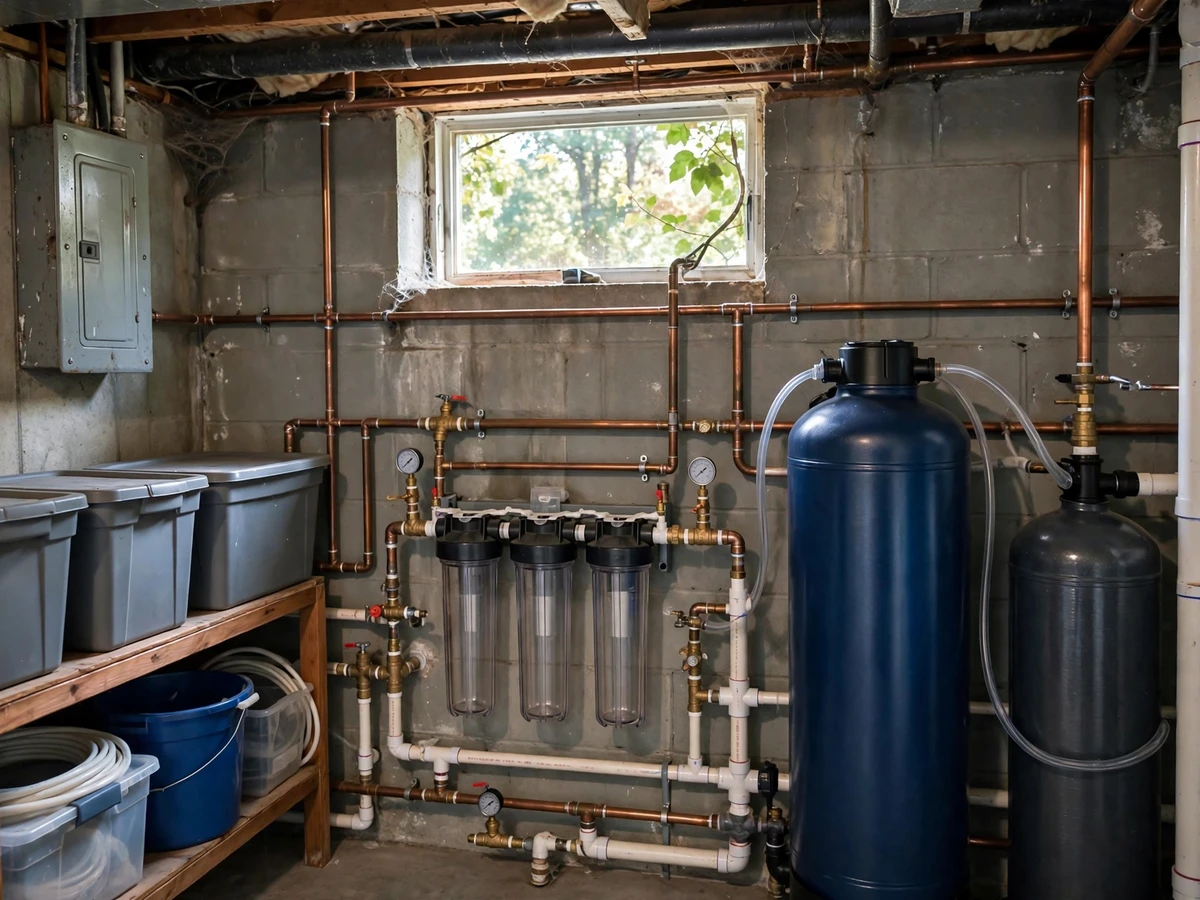
A whole-home system typically installs at the point where the main water line enters the house. That means access to that specific area, a basement, a crawlspace, a utility closet, is worth checking before assuming any given system will fit a specific home's layout without modification.
Maintenance for any filtration system, changing cartridges on schedule, resin refills for a softener, is a real ongoing cost worth factoring into the decision upfront rather than being surprised by it after installation.
We test for the specific contaminant or hardness level relevant to your water source before recommending a system, rather than selling a generic package that may not address what your water actually needs. That test result, not a generic regional assumption, is what should actually drive the system recommendation. We're glad to walk through exactly what the numbers mean before you commit to any particular system.
A whole-home softener is often discussed alongside water heater service, since moderately hard water accelerates the sediment buildup that shortens a tank's service life. If a well-water home's filtration need turns out to be more about a specific fixture issue, that may be a faucet or sink matter instead.
Well-water homes in Hickory Flat and the rural edges of Cherokee County have the most reason to consider a whole-home system beyond basic carbon filtration.
This service comes up most in the well-water areas of Hickory Flat and rural Cherokee County, though moderately hard municipal water makes filtration relevant sitewide.
Water quality questions come from every neighborhood but differ by source. City water customers in Towne Lake and downtown mostly ask about taste and hardness. Meanwhile, well-water homes in the rural stretches toward Hickory Flat need sediment and iron testing first. Owners of tankless units in Towne Lake and Bradshaw Farm often add a softener to protect the heat exchanger.
What It Typically Costs
| Service | Typical Range |
|---|---|
| Point-Of-Use Filtration System | $200 to $500 |
| Whole-Home Carbon Filtration | $1,200 to $2,500 |
| Whole-Home Water Softener | $1,800 to $3,500 |
We give a written quote before non-emergency work begins. Emergency dispatch carries a standard trip charge disclosed on the call. Want a real number for your situation? Call (770) 214-4545.
Water Softener Repair And Service
Many of our calls about water treatment are not for a new system but for an existing softener or conditioner that has stopped working. A softener that runs out of regeneration salt, a brine tank that has bridged or clogged, or a control valve that no longer cycles are the usual causes. Other times the unit overflows or leaks at the valve connections.
We check the brine well, the resin tank, the control head, and the bypass and drain connections to find out what is wrong. If a part needs replacing, we tell you whether the repair is worth making on that unit's age or whether replacement makes more sense.
If your water treatment equipment sits next to your water heater or main shutoff, keep that area clear. It helps us reach the valves quickly in an emergency and makes service easier.
Frequently Asked Questions
What's the difference between a water filter and a water softener?
A filter addresses taste, odor, and sediment. A softener specifically addresses mineral hardness (calcium and magnesium). Some systems combine both functions.
Is Woodstock's water actually hard?
Much of North Georgia's water is moderately hard due to the region's limestone and dolomite geology, which is a real, industry-recognized classification, not a sales pitch.
Do well-water homes need a different filtration approach?
Often yes. Well water can carry iron, sediment, or sulfur odor issues municipal water doesn't have, worth testing for before choosing a system.